For personal reasons this has been a particularly difficult week for me. Collaboration was the very last thing I was able to do.
Perhaps this is more than just this week as when I look back I think in an online capacity I do consciously resist it. Having completed my first BA degree online with Open University the participation levels in collaborative exercises was quite poor and I think these experiences have really tarnished my experience, which makes me resistant to future collaboration.
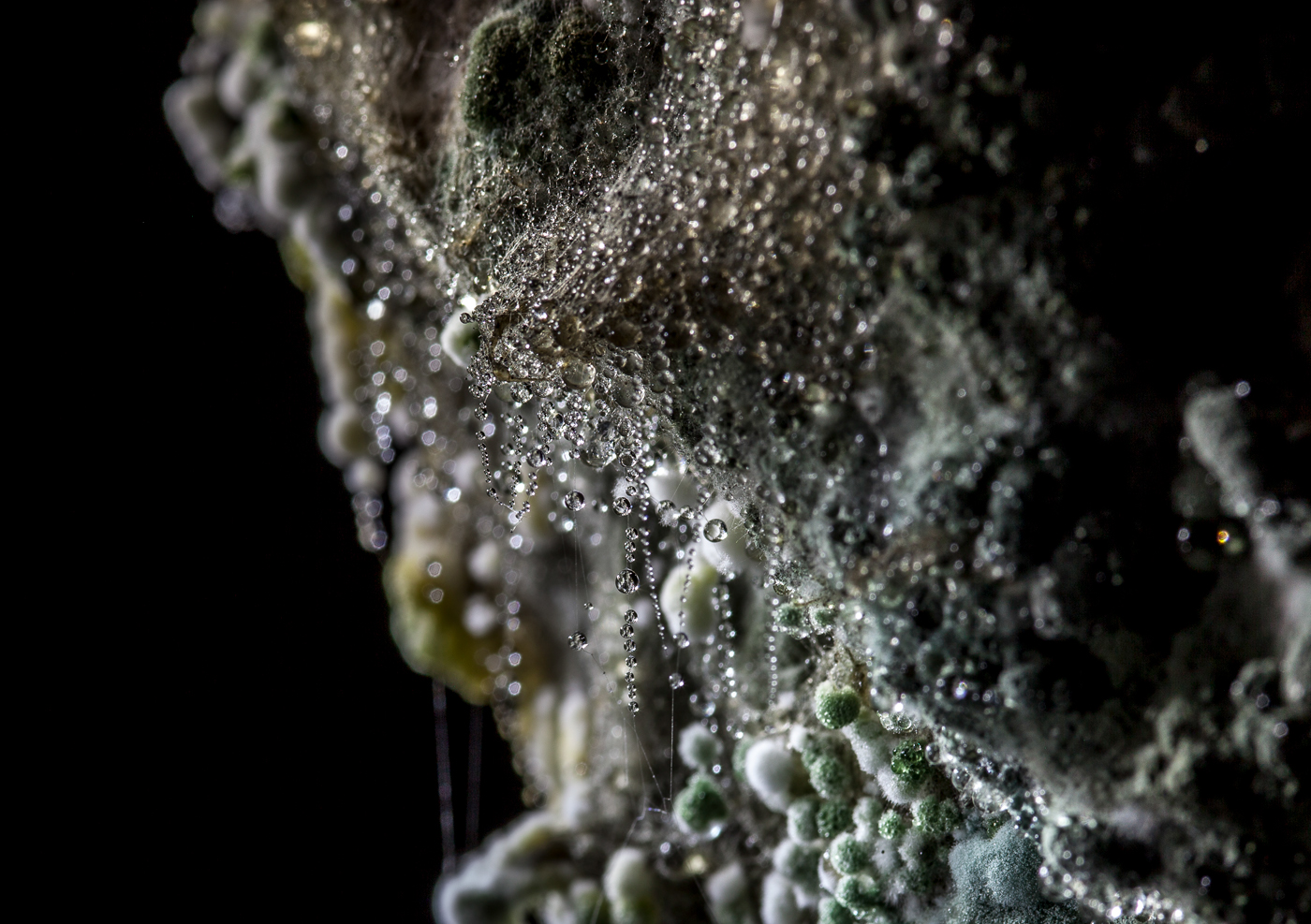
It could be said however through my project I work with living things. it could also be said that the fruit I am looking at in this module are not alive but when they get taken over by the mould they are living again, so I am collaborating with a living organism every time I get my camera looking at my mould or even when I am encouraging it to grow.
What I did do this week was crowd sourcing. As I wasn’t in a position to collaborate I sent out a social media post asking people to post images of their watches or clocks. A representation of time. Without realising it Time is pivotal to my project and my re-photography of the items. Watching the mould develop is linked to a time line. I just need to get the images I received into a Zine format to share with the people who helped me. I obtained approximately 70 images which I found astonishing in such a short time frame.
At this weeks webinar I took images using some new equipment I have obtained which is an ultra macro lens.
We discussed how I had created something that could almost be seen as a new landscape, it was therefore suggested to look at some landscape artists.
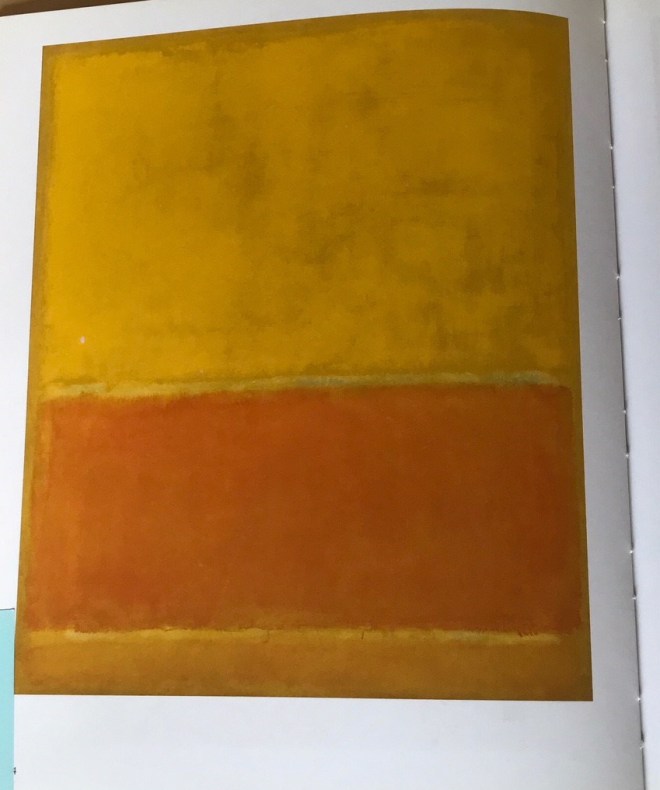
Due to the nature of my images it was also suggested to look at the work of Rothko. During this investigation I felt inspired by his work and his use of colour which is normally a great contrast of my own work as I do prefer working in black and white, so using colour is a new challenge for me.
The end of Rothko’s life is quite a tragic story so the story of the end of life seems to have a fitting link to my work, or this could just perhaps be linked to the loss my family have experienced this week.
Research
I looked a bit deeper into the work of Mark Rothko as I was intrigued to delve in a bit deeper.
Whilst our work is clearly vastly different genres, one photography the other oil and acrylic on canvas. What strikes me about the work of Rothko is how colours can be used to such abstract affects. I have achieved transitions of colour without really realising it.
It made me look more closely at how I capture the colours to allow my images to have more impact.
There are several images of Rothko’s where the colour palette reflects the natural aspects of my own images.
Looking through exhibitions of Rothko’s it is possible to see the possibilities of scale through his canvases. I’ve never really considered that I could create such large images for my own abstract images. Whilst I had hoped I don’t think I had accepted that an exhibition is a real option.
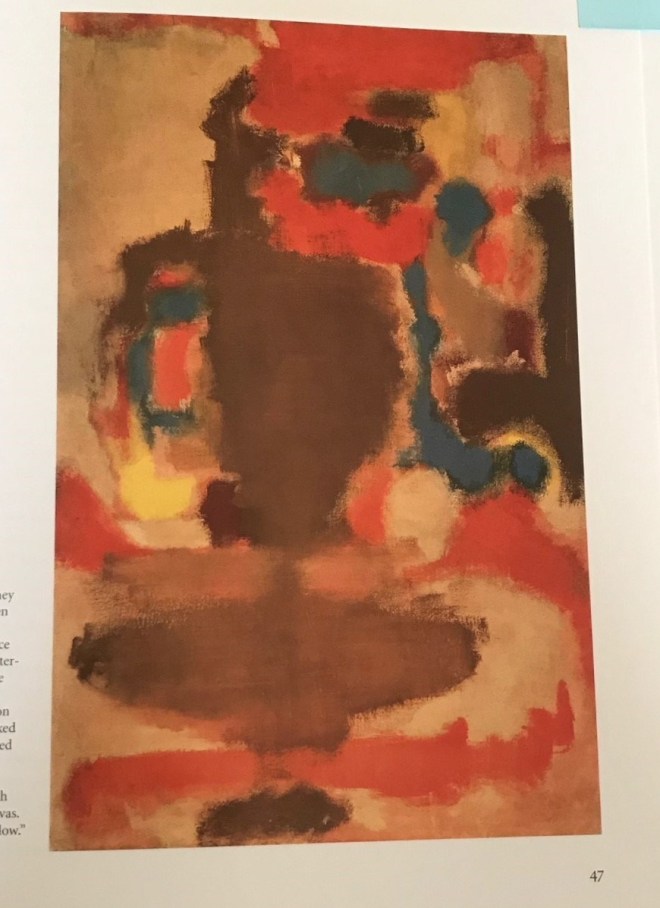
Pieces of Rothko’s work that particularly stand out to me are. Untitled (1948), Untitled (1968), No 15 1952 (1952), The Green Stripe (1955).
Mark Rothko – The Green Stripe 1955Mark Rothko – Untitled 1948Mark Rothko – Untitled 1968
These painting all have quite natural earthy tones and colours which I can relate to in my own practice.
Untitled 1948 will most likely become more relevant as my mould grows to bring new colours and shapes to the new life.
This week I’ve felt quite torn with some of the concepts that we have covered. In my opinion, no one should be able o reuse another individuals work without explicit consent. The ideas of reusing and reediting to make gain when you haven’t produced the original just does not seem morally right to me.
I think in the event that my work was re appropriated by someone else I would have taken the same action as Meiselas did in the case of the Molotov Man.
Whilst I have been influenced by others I have not taken someone else’s work so I am comfortable in my practice that I am working in the right way in line with my moral compass.
This weeks webinar was really beneficial. We discussed ways that I could make my images more interesting, working with the images I had taken since the last webinar.
I am looking at maybe not taking the whole piece of fruit in the frame, just picking out particular details. this will particularly come into play when it comes to exploring the mould at the end of the cycle.
I have been looking at the work of Daro Montag to see how they make beautiful images from organisms.
I have also looked at the work of Estonian photographer Heikki Leis and his series of images in the collection Afterlife.
Some of the the images I think it would have been nice to know what the items looked like beforehand. this is what I want to achieve with my images, a story of the stage before coming to the rebirth.
During this weeks webinar we discussed what could be potential outlets for my work, thinking that scientific venues may be appropriate for the nature of my images or perhaps even the use of x-ray paper to give my topic a more scientific feel.
I plan to do some research on scientific and aerial photography to broaden my view on the types of images I could possible achieve.
This week also came with researching safety procedures for what my new work might entail.
The concepts behind my work have made me consider the concepts of life and death a little more.to consider if i am actually saying that the development of the mould is a reincarnation or the development of something brand new.
It has also made me consider my own views and beliefs.
Do I believe in reincarnation?
Do I believe that the mould is alive?
Is the transformation from one thing to another just a simple scientific process or is it something else?
Research
In the development of my abstract imagery I have been looking at the work of Daro Montag – Who I met at the face to face event at Falmouth in February.
I have been looking at this work to gain a better understanding of how natural living organisms could be made into beautiful art.
The series Bioglyhs which I discovered on the website:
This work really assisted me in looking at the potential this type of work could have and the direction that it could take. Though it isn’t a direction I’m ready for just yet.
I also gained inspiration from the work in Dialogues with Nature. Not only was the imagery helpful but the examples of how to create a photographers sketchbook was a helpful insight into what I can produce to start and document my progress, especially when coming up to the Final Major Project to document thoughts and sketches as well as imagery. It could also be helpful to my audience to view these sketchbooks – as my work is documenting a period of time (again time will play a pivotal role in my work), it would be like a diary entry that could accompany an exhibition or be a zine that could be picked up at an exhibition.
The work in the This Earth series was inspiring show in the range of colours that could be found in the microscopic world. Whilst it is not in my current plans to go as far down this route it is interesting to see what the possibilities are.
Montag’s work and my own are similar in that we are looking at life-cycles of natural objects. I want to look at what happens after – the next stage of life. New Life.
This week has been a particularly exciting one. I completed my first professional assignment by being a Third Shooter at a wedding – I know I’m just a volunteer but this is a major step for me in my progression as a photographer.
With my practice, working so close up, and with using inanimate objects, being put into a position where my subjects were moving about was a real challenge. However being able to challenge myself and watch two other photographers was a really beneficial experience and I feel this can only improve my practice.
In this weeks work I was particularly drawn to the images of Shimon Attie in particular. The images of the practice of rephotography where a past and present were blended into one another, I felt were really impactful, especially Attie’s “The Writing on the Wall”
I would like to try in my own practice the merging of two images into one. This is also something that could be incorporated into my own work, merging the different stages or elements of a lifecycle into a single image I imagine would be quite interesting. I guess There are elements of different styles that would be difficult decisions to make perhaps this could be why I appreciate the blended images more as they show ans appreciation of the past and merge it into the today as if it is a memory occurring.
Some might argue that this blending of images is too much tampering of an image and making it an untruth of what is actually there – making the photography a liar but I don’t see if that way. I almost feel like the images that are completely blanking out the present day are telling the untruth like they are trying to block out the horrors of today’s society with a nostalgic take on the past.
During the break I decided to take a step away from my project and explore other types of photography, exploring the work or Sirkka-Lissa Konttinen in The Idea of North Exhibition at The Baltic in Gateshead. This exhibition was really interesting showing the development of culture in the North East. It has always been a huge interest of mine to research the region I am born and bred from, and it’s actually making me wonder whether I would like to explore a mini-project about my region and the presentations from this week has made me explore the ideas of rephotography.
When I was looking at images for the Place over Time activity I found images from the early 1900’s and even earlier than this which my family could tell me stories about and this stirred up emotions in me that I would love others to get from my own work.
Memory is such an important topic to me and perhaps it is time to explore this a little further to see where it goes. This was also an element that I discussed on my work experience this week. A wedding album for example is a reminder of a beautiful day and the memories will hopefully last a lifetime.
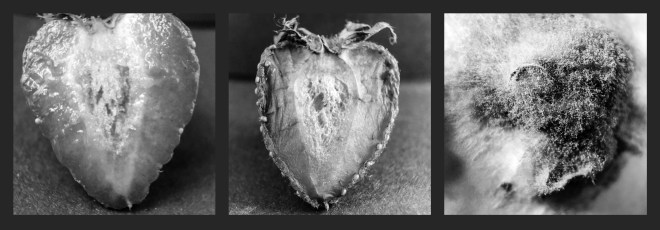
This weeks webinar left me feeling a little deflated about my work. Some of the pieces I took over the break were triptychs of fruit over a period of time, showing the fruit being taken over by mould in the end image.
I stuck to my iPhone, square format and black and white for these images as I have throughout the course. I have once again had my approach challenged which I have taken on board but when carrying out the request of using the DSLR and colour I really don’t like the results.
I will take these images to next weeks webinar for feedback and see what there is that I can do.
One idea that came from Week 1’s webinar was to blow the images up so large that they become pixelated. i’m also open to giving this a try but with the nature of my images I’m unsure of what the results would be.
With the DSLR I am not achieving the images yet that I would want to achieve I think this may well mean that this module is going to be one of trial and error. Or I may revert to the iPhone.
In the meantime I have found some artists who have worked with mould before so I want to learn about them.
I hope in a week or so to have a contact sheet of images from which I can short list.
I thinking that the theme of this module will be rebirth. It will certainly be an interesting exploration.
Research
Edward Weston has been very an influential part of my development throughout the whole of my Masters degree.
My work has developed a great deal throughout the modules to where my work is at now, this has made me look not so much at the still life of Weston but his landscape work and some of his images taken at Point Lobos which are much darker in feeling to his previous works.
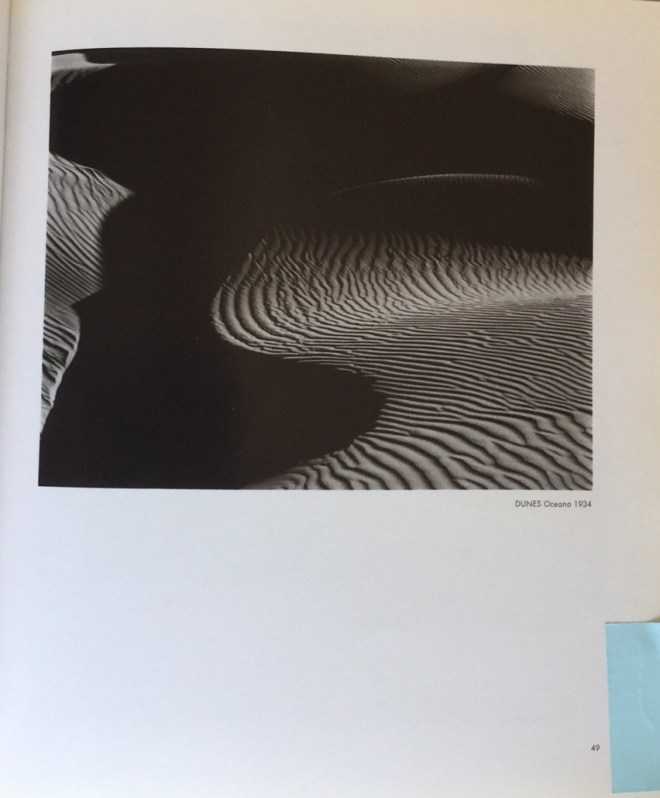
Edward Weston – Cypress – Point Lobos – 1929Edward Weston – Oceano- 1934Edward Weston – Point Lobos – 1930
What draws me more to these images more than some of the others is they are of more an abstract nature than his portrait or still life images. This brings me to compare them to some of the newer work that I have been creating. At first it was not my intention to achieve the level of abstraction that my mould could be likened to the landscape of another world and it was something of a light-bulb moment for me.
Whilst Weston, I feel has the basis of his work in making aesthetically pleasing images, which is exemplified in the diary entries in the book The Flame of Recognition. I get the impression that he was getting a joy from creating imagery that is different from other work he produced. This is something I can understand from my own work
Yet in the same way as my work he gained enjoyment from the abstract nature of the Cypress Trees at Point Lobos describing it as “twisted into the most amazing forms” (Weston in Newhall, Pg.28, 1965)
It is this kind of detail that I enjoy and look for in my own work, looking for shapes and textures from the subjects that I work with, but I want to show that in my images that death is not the end and that my subjects are evolving and transforming.
Weston revisited the locations many times shooting the landscape in various different ways. This is quite similar to the way that I am continually re-shooting my objects looking at them in different ways over a period of time documenting their changes.
In Weston’s later years particularly after his Guggenheim Fellowship in 1937, the subject of Weston’s work is noted to have become darker. In some ways this is a refreshing change from his search of beauty. In the Essay A Photographer’s Love of Life by Alex Nyerges noted the subject of his photography did in fact become death. The dead pelican below is an example of this. The work of erosion I feel is also an example of the change in his work.
It has to be said that the diagnosis of his Parkinson’s Disease also had an affect on the work he was producing, being limited to the work he could create and having to accept his mortality which results in the darker imagery.
PL42-BI-1 Pelican, 1942 – Photograph by Edward Weston
A major difference in my work this module is that I will be using a DSLR and working in colour. I find that this is a refreshing move away from the still lives and black and white. Whilst I still very much admire Weston’s work I am no longer as heavily influenced to attempt to emulate what he achieve in his still life work.
References
Weston, Edward (1965), Edited by Nancy Newhall, The Flame of Recognition, Aperture Foundation, New York, Pg 28, 29, 49, 77
This week has been presentation week where we receive peer feedback, this is always an interesting week and this one has been really beneficial.
With regards to my work I received really useful feedback and what I found even more pleasing is that viewers could see what I was trying to do and could even apply some of my images to their own past experience.
It does concern me a little that my use of iPhone does not give everyone a wholly positive feeling. Perhaps now in someways I want to keep it to prove a point that beautiful work can be created using the iPhone – i think using this method will always get a touch of “not proper photography” from some areas. I’m pretty sure that I am OK with this though! I saw this week that Light and Land are now doing landscape photography course in iPhoneography so I think I will also stick with it!
I did have good feedback with regards to the template that I use during my presentations which is also something that I can take forward for the future.
I did forget to mention that my intended audience/display platform at final goal is an exhibition – though I did mention my Instagram sharing, and it is a must to remember both of these things for my Critical Review.
The feedback also put the idea of triptychs into play. It is something I want to consider for future development but not something that I would be able to achieve for this module and I do like the idea at the moment of just diptychs featuring life and death.
Even with criticism I know that it is essential to take everything on board with a positive outlook and take a second look at my work and see if it is applicable and see where I can improve so that I don’t receive the same feedback again.
Watching the videos of my peers also allowed me to learn where I could improve my own work not only in presentation style but also how to critically review my own work better.
It is also allowing me to develop a clearer view of my own work through continually having to justify my practice.
Critical Contextualisation of Practice:
I have covered quite a range of photographers in this module. It is now the time to pull all of the knowledge I have gained from this. I have learnt a great deal from historical photographers such as William Henry Fox-Talbot and later Edward Weston to current photographers such as Peter Fraser and Roger Ballen. I have also crossed disciplines looking at Sam Taylor-Johnson’s work.
Professional Location of Practice:
I share a lot of work on Instagram but I want to see my photographs exhibited and I am already checking on possible locations to make this happen. I do like the social media side of my work though, perhaps because most of the time some form of feedback is received quite quickly.
Critical Analysis:
My work has grown into a project his module and it is starting to make sense. I also feel as though I have become better at analysing my project and making the necessary changes. I also feel I have been able to articulate this to my peers in webinars.
Written and Oral Communication Skills:
Whilst I feel I have made good progress in this area over the module. This is an area that I am still very much working on.
This week was mostly taken up with the planning and recording of my oral presentation. This process seemed a lot more straight forward having a clear direction of where I wanted to get to rather than stretching and grasping at straws.
Revisiting the basics of my newly changed project was great in that I could re-engage with my aims and also pick out pieces of the theory that I had selected that were not working for me.
For example I was trying to include so much into the theory, that I was missing how I was actually going to apply this. I therefore removed the Buddhist beliefs about the four stages of life/road to enlightenment, as the other 4 concepts that I wanted to look at are far more relevant and I am actually able to apply them, but more importantly explain to others what I am doing and why with my images.
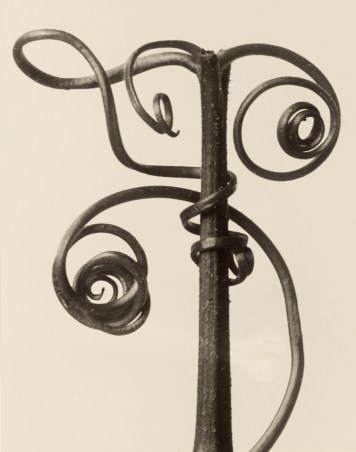
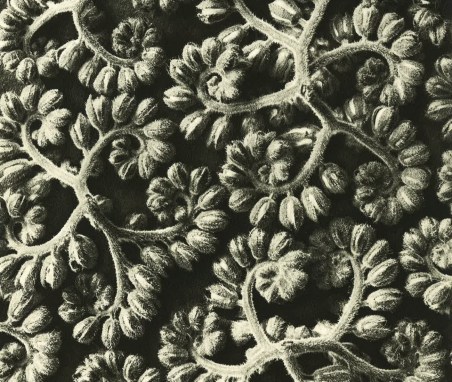
To explore more I have this week been reading – The Edge of Vision – The Rise of Abstraction in Photography by Lyle Rexler (2013). As my work is taking the direction of abstraction I felt this was going to offer some further insight. It brought me back to looking at photographers I haven’t considered since the early part of the course, Karl Blossfeldt and William Henry Fox-Talbot.
These two images show how I am able to use natural materials and still have beautifully abstract images. Especially with Blossfeldt’s work using the lessons I learnt about lighting from Edward Weston I am able to learn a great deal about the composition of abstract macro photography.
Carrying out further research I was absorbed by the Curburita (Pumpkin Tendrils)
This image has been carefully thought about in how to capture the curls. when I capture my pencil shaving I use I expect quite a similar process, I perhaps can do more of this to enhance my images further.
There is another image such as #95 Beckmannia Cruciformis (Slough Grass, Fruiting Spikelets)
I think the composition of this triptych how it is showing various areas of light and shade and still manages to contain the detail in the natural forms, this can also be seen in #96 Phacelia Panicle (Phacelia Congesta) where I was drawn in by the complex repeating nature of the plants.
It shows depth and is laid out interestingly to draw in the viewer with some elements of my work I can certainly learn a great deal from Blossfeldt.
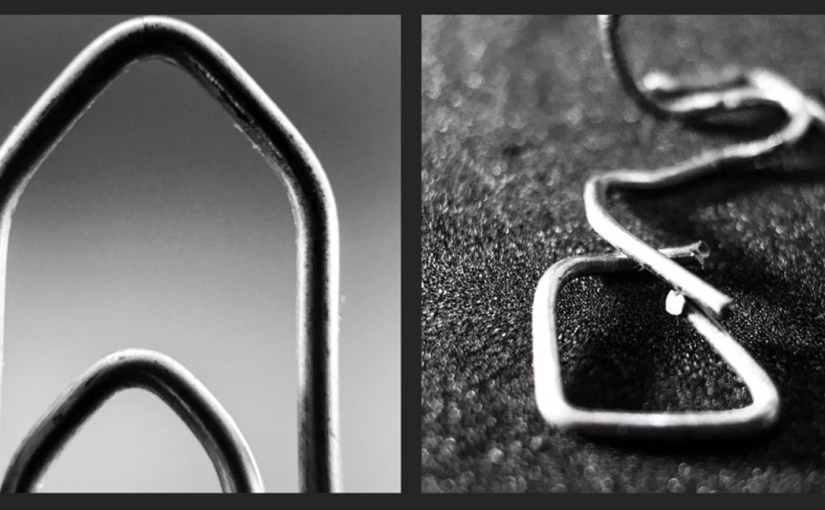
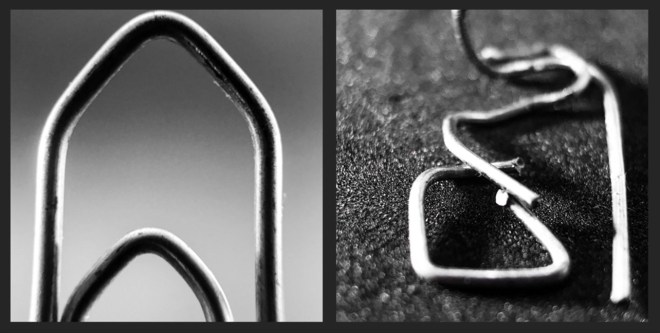
Looking at these images led me to take another of my own to use in my presentation:
Paperclip – Kirsty Logan – April 2018
I wanted to use elements that I had learnt from Blossfeldt and try to put them into action. I was also quite happy to see strength coming from the first image verging into fragility in the second. I want this to be felt by my viewer also.
References:
Rexler, Lyle, (2013) The Edge of Vision – The Rise of Abstraction In Photography, Aperture, New York.
After feeling a little lost this week I had a breakthrough after a 1:1 tutorial with Steph. I had gotten myself into a roller coaster of highs and lows of my MA project work.
The feedback from the webinar at the end of last week had me in a creativity dead-end. I understood my project is not always the easiest to comprehend, but something isn’t clicking with viewers.
My tutorial with Steph helped to show me the way out of my dead-end. I watched La Jetée by Chris Marker and this showed me how a series of still images could fit together within a short to tell a story. I think the voice and sound effects really added to ramping up the emotion from the images. This is not something I have considered myself before but was very effective.
I also explored Sam Taylor-Johnson’s moving image sequences of Still Life (2001) and A Little Death (2002), and they captured what I would like to be able to in stills. Having items in place showing the degeneration – the transformation from one to another – passing – it is the cycle.
The difference in the feeling from the two sequences was quite unbelievable to me at first and then it clicked! With the fruit in Still Life, the mould slowly creeps over, becoming an new organism, this appears quite gentle and almost a beautiful process. To then go straight into A Little Death is quite a different experience. The dead rabbit doesn’t have the dignity curtain of the mould encapsulating it. It is instead eaten from the inside out with the creeping blackness of death moving around it. It is possible to see the maggots coming and going and transforming into flies, in the next stage of their lives. whilst you are watching you are witnessing a whole new life-cycle which is the whole point to my project, but this sequence comes over a brutal, almost a violent horror story. It is this emotion, these feelings that I want to be able to put into my images. It was another turning point for me to see these moving image sequences. It gave me some motivation back.
Steph and I talked about the possibilities of a diptych series. This couldn’t have been a better suggestion. Whilst I am continuing to shoot my life-cycle, it gives me the freedom to curate the strongest images of the cycle and work them together. Skills of mine that I would have perceived as week earlier in the course are really starting to work as a strength.
I started with some images that I had already taken:
Pencil – Kirsty Logan – March 2018
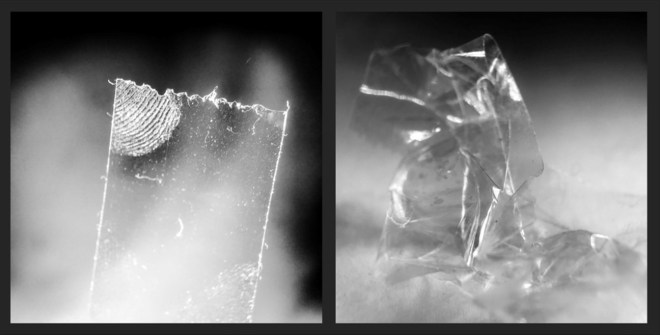
I then carried on to experiment with other materials:
Sellotape – Kirsty Logan – March 2018
Whilst I like this image I am not getting any emotion from synthetic materials. I was thinking about talking about Identity with the fingerprint but then it didn’t really fit to being crushed and useless in the next.
From this I moved to an object I have worked with in previous modules:
Candle – Kirsty Logan – March 2018
I took another candle images as the dancing smoke gives me joy as if it has its own energy, but I also wanted to feel the bleeding candles pain as the wax slips away.
I feel as if I am on a path now and I am looking forward to continuing with the experimentation.
I want to see these images in an Exhibition, I feel like I now have a goal for the images.
Following on from last weeks work where I described myself as being the storyteller/photographer I came across the following in one of our presentations.
“Photographs in themselves do not narrate, photographs preserve instant appearance” (Berger, 2013, P52)
The presentation goes on to say
“but again what happens when we do not know what the subject matter of that appearance actually is so how do we encourage narration” (Cosgrove, 2017, Speaking Photographically Presentation)
This quote from Berger and the following quote from Steph is actually really appropriate to my project work. With my style of photography this was an issue that was becoming apparent, viewers couldn’t see my viewpoint and couldn’t understand. It may still be possible that now without my narrative being explained and the viewers being talked through my work the understanding may still not be there, because the concept is not a common one maybe.
In Jeff Wall’s interview he was of the opinion that a picture cannot tell a story because it is a still. I feel a little confused by this. The saying I have always believed is a picture is worth a thousand words, so it is my belief that an image can speak to a person without telling the story that the image is meant to be putting over.
Below are the images I prepared for this weeks work, again touching upon new beginnings, death, but also vanity.
Kirsty Logan – March 2018
Kirsty Logan – March 2018
Kirsty Logan – March 2018
Kirsty Logan – March 2018
Kirsty Logan – March 2018
Feedback being received this week particularly through the Webinar is that my photographs are struggling to tell their story this could perhaps be that the stages of life that I am choosing or the way that I am shooting them. It’s something that I’m going to really have to think about because if viewers are still missing what I’m trying to do perhaps its time to reconsider the project as a whole.
I was pointed in the direction of two photographers this week. The still life work of Roger Ballen and also Peter Fraser, who I knew from the Two Blue Buckets image.
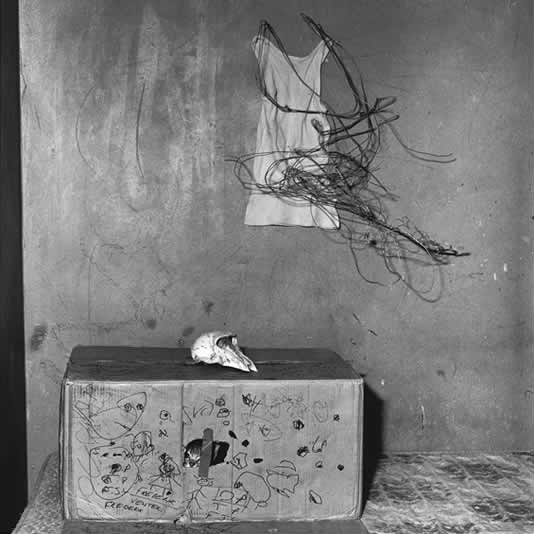
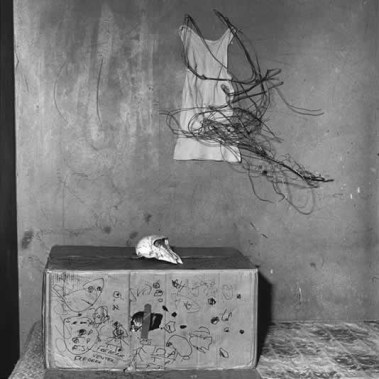
First of all I looked at Roger Ballen’s (www.rogerballen.com) work. I looked at the still life images in the projects Shadow Chamber (2005), Boarding House (2009), Animal Abstraction (2011) along with some of the other collections. On a purely viewer level it was not an enjoyable experience for me. However I can see elements that I can take from the images. For instance we both work in square format in black and white. Ballen’s work is far grittier than mine, to me it shows everything with a sense of darkness. For example Cat in box (2002) from the Shadow Chamber collection. I get a sense of entrapment, fear, confusion. The emotions I gain from this and others like it is what I need to have the viewers feel from my own work. So not only will I need to consider the lighting of my image but also my composition perhaps, through creating the scene for my inanimate objects and shooting them in this way. Creating a location and a scenario just for the object. This is very much something that I can take with me from Ballen’s work.
In quite a contrast to the work of Ballen’s I also looked at the work of Peter Fraser (http://www.peterfraser.net/projects/) and in particular the collections Lost For Words (2010), Nazraeli Monograph (2006) but the collections Material (2002) and Everyday Icons (1986) were the ones that resonated with me.
Whilst I work in black and white and Fraser in colour the picture of what it think is wire is the type of image compositionally that I would want to be able to produce. The interest is in the item, you can see all different types of textures from harsh metals, to moist grease like substances. This is the part that draws me in so much and something I want to appear so interesting in my own work.
The sole focus is on the insides of the product and whilst there are items in the background I don’t find them distracting, which is a problem that I have been experiencing in my own images. the composition is certainly an area that I can learn a great deal from but again also the lighting techniques used.
The research that I have completed into Ballen and Fraser this week has been really helpful in showing me techniques that I can try to put into practice to improve my images and therefore increase not only the impact of my own images but also try to get a deeper reaction to the meaning of my images.
References:
Berger, John (2013) Understanding a Photograph, London, Penguin
This week I have felt particularly torn between my admiration of Salgado’s images and completely agreeing with Sischy’s criticism in The New Yorker.
In my opinion they are too beautiful to be making a clear statement. As an individual viewer I was drawn in by the beauty and compositions that mimicked fashion shoots in a high end magazine that I failed to read what the true message was. Whereas with Nick Brandt’s images whilst still beautiful had far more impact upon me with regards to the message that they were trying to convey.
This brings me to think in reference to my own practice. I worry that I may be more on the Salgado side of the spectrum choosing aesthetics over message, I would therefore also fall victim to the criticisms Sischy had “Beauty is a call to admiration, not to action” (Sischy 1991, P.22)
I think one thing that I can take from this is that I am not trying to make a call to action, though I would like an emotional reaction from the viewers of my images.
I found a quote this week by Morley Baer:
“Quit trying to find beautiful objects to photograph. Find the ordinary objects so you can transform it by photographing it.” – Morley Baer (1916-1995)
I felt that this was really appropriate to my work in that I am using inanimate objects, the everyday, the banal. It gave me some inspiration.
It also led me to look further into his work, I’m not really sure how I haven’t come across him before since two of his close associates were Edward Weston and Ansel Adams! Who have shown me so much about photography.
Looking at Baer’s work the way he captures light over his landscapes is breathtaking (http://www.photographywest.com/pages/baer_photos.html) and makes me determined to master the lighting issues that I am having with my work.
I don’t want people to be desensitised from my images or for that matter me to be desensitised from my objects when creating my images.
Through my project work this week I found inspiration from music. A song called I’m in here by Sia
The lyrics in this song really spoke to me in how I would like my images to speak. The lyrics “I’m in here. Can anybody see me?” hit the nail on the head for me – can everyone see the life-cycle of the soul that I am asking them to discover. This really helped me put together some images this week.
I focused on just one life event this week, the occurrence of feeling broken and hurting from the soul. Feed back was mixed but it is going to be a developmental process. Entwining these images with Sia’s song, I’m asking can you see the soul that is hurting here?
With some of the work that we have covered this week it brings me to the conclusion that there is a huge difference between telling a story and having a message. With my work I am taking the role of storyteller my motives at this time do not stretch beyond this.
In someways perhaps through the use of Wabi Sabi in which part of the theory is impermanence, this could perhaps be taken further with the impermanence being extinction or life limiting conditions. Perhaps this is something to think about in the future.
During the course of this weeks work we have been asked to consider the following:
How your practice may (or may not) be seen as adhering to a specific ideology:
I don’t think I adhere to ideology – in some ways the new direction I have taken uses ideologies to show my narrative. It takes a somewhat suspended view of what is seen as normal to understand my work.
The potential impact of this given the subsequent meaning and reception that your practice might attract. From whom?
The people most drawn the the theories that I have used will most likely be those with alternative beliefs, outside of the mainstream.
The reception I could receive could be complete disagreement that inanimate objects are just that, inanimate. Also that it is not possible to think of them having another from such as a soul or a spirit. It is possible that people could see the theories that I have incorporated as nonsense. As with the previous incarnation of my work there is always the possibility that some people will just not understand or get it.
Any power negotiations within your own practice:
I don’t believe that I have power negotiations – I photograph inanimate objects they would not normally be something that could be stereotyped in the same way that humans could be. Although maybe I am creating stereotypes in the life events that I am creating. Overall though as with all art my work will be subject to judgement.
Your practice in the context of other visual practices and theoretical points:
I am using a lot of theory to help back up the narrative I have created. Other visual practices I could identify with would be portrait photographers/artists, who are capturing the passage of time by completing a series of portraits of developing individuals. An example of this would be Steve Pyke’s Jack, Duncan and Lola-Rae series – showing the children develop and grow up or even his acts of memory series which shows the passing of time https://www.pyke-eye.com/
With regards to my project work this week I have carried on with the theme of life cycles and inanimate objects I have begun to look at the Japanese Philosophy of Wabi Sabi
“It offers an aesthetic ideal that uses the uncompromising touch of mortality to focus the mind on the exquisite transient beauty to be found in all things impermanent” (Juniper, 2003, Pg2)
I particularly liked this extract from Andrew Juniper’s text it made me really consider the impermanence of everything and how I aim to focus my audience attention onto the “transient beauty” of the inanimate objects.
I have also been looking at the essays in Animism Volume 1 – Edited by Anselm Franke, in particular Franke’s essay “Much trouble in transportation of Souls or: The sudden disorganisation of boundaries” Franke is a curator and writer.
Whilst much of this I don’t think is particularly relevant to the channels I want to explore it was interesting to consider the distinction between life/non-life. Perhaps this is something I can think about whilst taking my images.
I decided to return to my iPhone this week and retake/develop upon the images that I took last week
With these images I wanted to look at a sense of heartbreak/confusion with my first images and moving through working life, to instances when a person might feel broken, with the pencil shavings being recovery, a person moving on along the lines of a rebirth.
The new narrative is really working for my and this has reignited how I feel towards my work as it seems like there is a real direction that I can go in now.




















 Kirsty Logan Photography